Quick Answer
5G is the fifth generation of wireless network technology, delivering download speeds of 1-10 Gbps on millimeter-wave bands and 100-900 Mbps on sub-6 GHz frequencies, with latency as low as 1-10 milliseconds compared to 4G’s 30-50ms. By 2026, commercial 5G networks are operating across North America, Europe, and Asia-Pacific, with population coverage exceeding 85% in urban areas through carriers like T-Mobile, Verizon, AT&T, China Mobile, and SK Telecom. The technology runs on three spectrum tiers – low-band, mid-band, and millimeter-wave – and supports applications including autonomous vehicles, industrial automation, and smart city infrastructure that 4G networks cannot handle at scale.
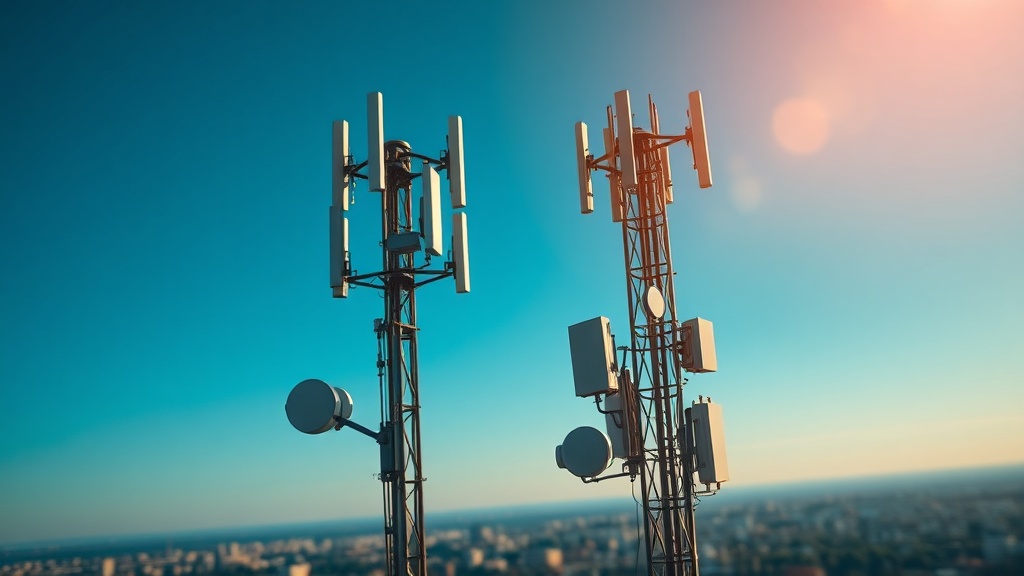
What Is 5G Technology? Core Fundamentals Explained
5G is the fifth generation of cellular network technology, succeeding 4G LTE and representing the most significant leap in wireless capability since mobile broadband became mainstream. Calling it just a faster version of 4G significantly undersells what it actually changes. The architecture, the spectrum, the antenna design, the core network structure – almost every layer of the technology has been rebuilt from scratch.
At its foundation, 5G is defined by three distinct use case pillars established by the ITU (International Telecommunication Union). The first is enhanced mobile broadband (eMBB) – this is the one consumers notice immediately, delivering peak download speeds of 1-10 Gbps and making high-definition video streaming, cloud gaming, and real-time AR/VR applications viable on a mobile connection. The second pillar is ultra-reliable low-latency communication (URLLC), which targets applications requiring near-instantaneous response times – think industrial robots, autonomous vehicles, and remote surgery where a 40ms delay is the difference between a successful operation and a catastrophe. The third is massive machine-type communication (mMTC), designed to connect up to one million devices per square kilometer, enabling the dense IoT deployments that smart cities and connected factories require.
From a spectrum standpoint, 5G operates across two frequency ranges defined by 3GPP as FR1 and FR2. FR1 covers sub-6 GHz frequencies from 410 MHz to 7.125 GHz – this is where most of the early 5G coverage has been built, offering a reasonable balance between range and speed. FR2, commonly called millimeter-wave or mmWave, spans 24.25 GHz to 52.6 GHz. mmWave delivers the headline-grabbing multi-gigabit speeds but with significant range and penetration limitations that have complicated real-world deployment.
The technical specifications are genuinely impressive when you lay them out. Peak download speeds reach 20 Gbps theoretically, with practical commercial targets of 1-10 Gbps. Latency drops to 1ms in ideal conditions, with real-world URLLC deployments typically achieving 5-10ms end-to-end. The spectral efficiency – how much data you can push through a given slice of spectrum – is roughly 3x better than 4G LTE, achieved partly through massive MIMO antenna arrays that use dozens to hundreds of antenna elements simultaneously.
Chipset vendors like Qualcomm have been instrumental in making these specs real for consumers. Their Snapdragon X series modems power the majority of Android 5G devices globally, and their modem-RF architecture choices have directly influenced how carriers deploy sub-6 GHz versus mmWave in different markets.
One thing worth understanding is how differently 5G performs depending on which spectrum band your carrier has deployed in your area. A phone showing “5G” on the status bar could be operating on low-band 600 MHz spectrum – fast 4G speeds, essentially – or on C-band mid-spectrum hitting 400-600 Mbps, or on mmWave touching 2+ Gbps in a dense urban corridor. The “5G” label covers a wide range of actual experiences, which is something carriers have been justifiably criticized for not communicating clearly to consumers.
Understanding these fundamentals also matters when comparing carrier plan tiers. Reviewing AT&T wireless plans with 5G is a useful exercise in seeing how carriers translate these technical tiers into consumer-facing service levels and pricing.
5G Network Architecture and Infrastructure Requirements
Building a 5G network is considerably more complex than upgrading from 3G to 4G was. The infrastructure requirements span three major domains – the radio access network, the transport and backhaul layer, and the core network – and each has changed substantially from its 4G predecessor.
The Radio Access Network (RAN) in 5G uses a new standard called New Radio (NR), replacing the LTE air interface. The physical base stations are now called gNodeBs (gNBs) rather than the eNodeBs used in 4G. What makes gNBs architecturally interesting is the concept of functional splitting – the radio hardware can be physically separated from the baseband processing unit, allowing carriers to centralize processing in a cloud RAN (C-RAN) setup or distribute it to the edge. Vendors like Ericsson, Nokia, Huawei, and Samsung have all developed gNB hardware, with Open RAN (O-RAN) specifications now allowing multi-vendor deployments that were previously impractical.
Massive MIMO is one of the defining features of 5G radio infrastructure. Where a 4G antenna might have 4-8 antenna elements, a 5G massive MIMO unit can have 64, 128, or even 256 elements. This enables beamforming – directing radio energy precisely toward specific users rather than broadcasting omnidirectionally – which dramatically improves spectral efficiency and reduces interference. The physical size and weight of these units is a real-world deployment challenge, requiring stronger mounting hardware and more careful structural assessments on existing towers.
The backhaul requirement for 5G is where many carriers have hit significant deployment friction. mmWave deployments in particular require fiber connectivity to virtually every small cell, and small cells need to be deployed every 100-300 meters in dense urban environments. Installing fiber at that density in established cities means negotiating with municipalities, managing street-level construction, and acquiring thousands of small site locations on light poles, building facades, and street furniture. This is slow, expensive work – some estimates put the full fiber backhaul buildout cost in the US alone at over $100 billion through 2030.
The 5G Core (5GC) represents the most architecturally significant change from 4G. Where the 4G Evolved Packet Core (EPC) was largely monolithic, the 5G core is built on a service-based architecture using cloud-native network functions deployed as microservices. This enables network slicing – creating multiple virtual network instances on the same physical infrastructure, each with guaranteed quality of service parameters tailored to specific use cases. A carrier can slice its network to give an autonomous vehicle operator guaranteed 1ms latency while simultaneously providing a streaming service with high bandwidth but relaxed latency requirements. This capability simply didn’t exist in 4G.
Multi-access Edge Computing (MEC) is another critical infrastructure element. By placing compute resources at the network edge – physically close to users rather than in centralized data centers – carriers can reduce latency for applications that need it most. A factory running automated machinery on 5G URLLC doesn’t want its control signals traveling hundreds of miles to a cloud data center and back. MEC brings processing within milliseconds of the device.
The non-standalone (NSA) versus standalone (SA) distinction matters enormously here. NSA 5G relies on a 4G LTE core network for control signaling, using 5G NR only for data. It’s faster to deploy but inherits 4G’s latency floor and cannot support network slicing fully. SA 5G uses a fully native 5G core, unlocking the architecture’s real potential – but it requires complete core network replacement, which is why many carriers are still mid-transition as of 2026.

5G Frequency Bands and Spectrum Allocation Globally
Spectrum is the foundation that 5G networks are built on, and the choices different countries and carriers have made about which frequencies to prioritize have directly shaped the 5G experience their customers receive. Understanding these allocations explains a lot about why 5G performance varies so significantly between regions.
The three-tier spectrum framework works like this: low-band (below 1 GHz) offers excellent range and building penetration but limited bandwidth – maybe 50-100 MHz per carrier, yielding speeds similar to fast 4G. Mid-band (1-6 GHz) is the workhorse of 5G globally, offering a genuine balance of coverage and capacity with 100-400 MHz channel widths achievable. Millimeter-wave (24 GHz and above) delivers the maximum speeds with channel widths of 400-800 MHz but has range measured in hundreds of meters and struggles with walls, foliage, and even rain at higher frequencies.
In the United States, the C-band (3.7-3.98 GHz) has become the primary mid-band workhorse after the FCC’s landmark auction concluded in 2021. Verizon, AT&T, and T-Mobile together spent over $80 billion acquiring C-band licenses. T-Mobile entered the C-band auction with a structural advantage – its $26 billion Sprint acquisition brought the 2.5 GHz mid-band holdings that now form the backbone of its 5G coverage advantage. Verizon and AT&T had to clear satellite interference in the C-band before deployment, causing delays that T-Mobile exploited to extend its coverage lead.

In Europe, the 3.4-3.8 GHz n78 band has been the primary mid-band choice, with auctions completing across most EU member states by 2023-2024. The European approach has been more fragmented – each country conducts its own spectrum auction with varying license terms, coverage obligations, and pricing. The 26 GHz mmWave band has been allocated in several markets for urban hotspot and industrial use but has seen slower commercial deployment than in the US and South Korea. ITU-R frameworks have provided some harmonization through the IMT-2020 standards process, but national variations remain significant.
In Asia-Pacific, China stands out for its early and aggressive allocation of 4.8-5.0 GHz spectrum to China Mobile, complementing its 2.6 GHz and 3.4-3.6 GHz holdings. South Korea’s early 5G launch in 2019 used the 3.4-3.8 GHz band alongside 28 GHz mmWave – SK Telecom in particular has pushed mmWave deployment in Seoul more aggressively than carriers in most other markets. Japan’s NTT DoCoMo operates across 3.7-4.2 GHz alongside 27.5-28.3 GHz mmWave bands, while India has been deploying the 3.3-3.67 GHz band following its major spectrum auction.
For 2026 and beyond, spectrum above 6 GHz is being studied under the “FR3” designation for potential 5G-Advanced and 6G use, with bands between 7-24 GHz receiving particular attention as they offer better propagation than traditional mmWave while still providing substantial bandwidth. The WRC-27 (World Radiocommunication Conference 2027) is expected to make landmark decisions on these upper-mid-band allocations that will shape network design through the 2030s.
Global 5G Rollout Status and 2026 Deployment Milestones
According to GSMA Intelligence, over 240 operators across more than 100 countries had launched commercial 5G services by early 2026, with global 5G connections surpassing 2 billion – roughly 25% of total mobile connections worldwide. That headline number masks dramatic variation between regions and even between carriers within the same country.
North America
The US market has settled into a clear three-carrier structure. T-Mobile holds the coverage lead, having deployed its 2.5 GHz mid-band spectrum at scale to reach 82% population coverage with what it calls “Ultra Capacity” 5G – a meaningful distinction from the low-band coverage that technically qualifies as 5G but delivers limited speed gains. T-Mobile’s 5G expansion strategy has centered on this mid-band advantage, aggressively targeting markets where AT&T and Verizon were still clearing C-band interference. Verizon has pushed its C-band buildout to reach 88% population coverage and has the most aggressive mmWave deployment in dense urban cores. AT&T sits at 85% coverage and has been accelerating its SA 5G core transition throughout 2025-2026.
Canada’s Bell, Rogers, and Telus have each deployed national 5G on 3.5 GHz spectrum, with urban population coverage exceeding 80% in major cities. Mexico’s rollout has been somewhat slower, with AT&T Mexico and Telcel covering major urban centers but with nationwide coverage still developing.
Europe
European 5G deployment has been solid but uneven. Germany’s Deutsche Telekom leads with 79% population coverage across its n78 3.6 GHz and 2.1 GHz holdings. France’s Orange has pushed coverage to 76% in population terms but faces geographic challenges across rural and mountainous regions. The UK’s EE, Vodafone UK, O2, and Three have all deployed nationwide 5G with varying coverage depths. Spain presents an interesting case – carriers like Movistar, Vodafone, and Orange Spain have built significant urban 5G networks, and understanding the broader dynamics of European carrier 5G approaches including Spanish operators gives useful context for how EU deployment models differ from US strategies. The EU’s target of 5G coverage for all populated areas by 2030 is still tracking on schedule in most member states.
Asia-Pacific
This region contains both the world’s most advanced and most nascent 5G markets simultaneously. China Mobile’s 91% population coverage is staggering in scale – the carrier has built over 2.8 million 5G base stations domestically, more than the rest of the world combined. The deployment speed has been possible partly through coordinated government support and spectrum allocation policy. South Korea’s SK Telecom and KT have pushed coverage to 89% and 87% respectively, with meaningful mmWave deployment in Seoul and Busan. Japan’s NTT DoCoMo covers 87% of population with parallel NSA and SA infrastructure, targeting full SA 5G core completion by 2026. India is rapidly expanding after its mid-2023 launches, with Reliance Jio and Airtel aggressively building out 5G on recently acquired spectrum.
The standalone 5G core transition is the major 2026 milestone to watch across all regions. NSA 5G gave carriers a faster path to deployment but created technical debt that needs resolving before network slicing and URLLC services can be commercialized at scale. Most major carriers are targeting SA core completion in their primary markets by end of 2026, with full SA transition including secondary markets extending to 2027-2028.
5G Use Cases and Business Applications in 2026
The use case story for 5G has matured considerably since the theoretical applications being discussed in 2019 and 2020. By 2026, several of these applications have moved from pilot projects to genuine commercial deployments – though the adoption curve varies significantly by industry and application type.
Autonomous Vehicles and Smart Transportation
5G’s URLLC capabilities are central to vehicle-to-everything (V2X) communication – where vehicles communicate with traffic infrastructure, other vehicles, and pedestrians in real time. The sub-10ms latency requirement for collision avoidance systems rules out 4G LTE entirely. Deployments on managed motorways in Germany, South Korea, and select US corridors now use 5G C-V2X to coordinate traffic flow and alert connected vehicles to hazards before they’re visible to drivers. This connects directly to broader 5G and smart city infrastructure initiatives where traffic management systems are integrated across entire metropolitan areas.
Industrial IoT and Manufacturing
This is arguably where 5G has delivered the most concrete business value to date. Automotive manufacturers including BMW, Volkswagen, and Toyota have deployed private 5G networks in production facilities to connect automated guided vehicles (AGVs), robotic assembly arms, and quality control systems. The productivity argument is quantifiable – BMW’s 5G-connected plant in Munich reported a 20% reduction in unplanned downtime in 2024 by enabling real-time predictive maintenance data from machinery. The manufacturing sector accounts for a significant share of private 5G deployments globally, with the Industrial Internet of Things (IIoT) market projected to exceed $650 billion by 2028.
Healthcare Applications
Remote surgery pilots using 5G URLLC have moved from laboratory demonstrations to limited clinical trials. The Chinese Academy of Medical Sciences completed documented remote surgical procedures over a 5G network in 2023, with the surgeon operating robotic instruments from a different city. More practically, hospital-wide 5G deployments enable real-time high-definition imaging transfer, remote patient monitoring with continuous vital data streams, and AR-assisted surgical navigation. Telemedicine consultations with real-time diagnostic imaging are operational in several major health systems across South Korea, Germany, and the US.
Entertainment and Consumer Applications
Cloud gaming services from Xbox Game Pass, GeForce Now, and PlayStation Now benefit directly from 5G’s combination of high bandwidth and low latency – the two requirements that make the difference between a fluid gaming experience and an unplayable one. AR/VR streaming is another application that 5G enables at a different level than 4G, with headsets like the Apple Vision Pro and Meta Quest series capable of streaming higher-quality spatial content from edge servers rather than requiring all compute power to be in the headset itself.
Smart Cities
Municipal governments from Barcelona to Singapore to Kansas City are integrating 5G connectivity into utility networks, public safety infrastructure, and traffic management systems. Sensor networks for air quality monitoring, smart street lighting, and waste management optimization all run on the mMTC capabilities of 5G. The ability to connect a million devices per square kilometer means a city grid can have sensors on every utility pole, manhole cover, and transit stop without spectrum congestion becoming a limiting factor the way it was on 4G.
5G Performance Metrics: Speed, Latency, and Reliability Benchmarks
Real-world 5G performance data has accumulated significantly since early deployments, and it tells a more nuanced story than the theoretical specifications suggest. The gap between what 5G can do at its best and what a typical user experiences daily is worth understanding precisely.
Download Speeds
Sub-6 GHz 5G deployments – the type covering most of the 85%+ population coverage figures – deliver median download speeds of 100-500 Mbps in real-world conditions, depending heavily on distance from the cell site, network load, and device capability. This is a genuine improvement over 4G’s typical 15-100 Mbps, but it’s a far cry from the multi-gigabit headline figures. mmWave 5G in optimal conditions – standing outside in a dense urban area close to a small cell – can genuinely hit 1-3 Gbps on a single device. Verizon’s mmWave deployments in NFL stadiums and major airports have demonstrated sustained throughput above 1 Gbps per device in field testing.
Carrier-specific benchmarks from independent testing firms like Opensignal and Ookla in 2025-2026 show SK Telecom leading globally on average 5G download speeds at 650-800 Mbps, benefiting from its mature SA core and extensive mid-band deployment. China Mobile and NTT DoCoMo follow closely. Among US carriers, Verizon’s average sits at 450-550 Mbps, AT&T at 400-480 Mbps, and T-Mobile at 350-420 Mbps – though T-Mobile leads in coverage consistency across diverse environments.
Latency
This is where the NSA versus SA distinction becomes starkly visible in real-world measurements. NSA 5G networks, which rely on a 4G LTE core for signaling, typically achieve 15-25ms round-trip latency – better than 4G’s 30-50ms but nowhere near the sub-10ms that SA 5G can deliver. SA 5G cores with MEC edge computing can push application latency to 5-10ms in practical deployments. For most consumer applications – video calls, streaming, browsing – this difference is imperceptible. For industrial automation, competitive gaming, and URLLC applications, it’s the entire value proposition.
Network Slicing and QoS
Network slicing is operational on SA 5G cores at a commercial scale in South Korea, China, and increasingly in parts of Europe as carriers complete their SA transitions. For consumers evaluating carrier options and plan tiers, understanding what QoS guarantees come with different service levels is increasingly important. Checking AT&T wireless plans with 5G is a practical example of how carriers package 5G service tiers with different performance guarantees at the consumer level.
Reliability
5G URLLC specifications target 99.9999% availability (“six nines”) for mission-critical applications, compared to 4G’s typical 99.9% to 99.99% targets. Commercial URLLC service guarantees at scale are still maturing – they’re available in private network deployments but not universally on public networks. For consumer connectivity, 5G mid-band networks have demonstrated strong reliability improvements over 4G, with notably fewer dropped connections in high-density environments like stadiums and transit stations where 4G congestion was historically severe.
5G Challenges and Infrastructure Hurdles in 2026
5G is genuinely capable technology, but its deployment has encountered real obstacles worth examining honestly. Several challenges that were predicted in 2019-2020 have turned out to be exactly as significant as warned – and a few unexpected problems have emerged along the way.
mmWave Propagation Limitations
The physics of millimeter-wave radio haven’t changed to accommodate carrier business plans. mmWave signals at 28 GHz attenuate rapidly in open air, are blocked by buildings, struggle with glass windows, and are absorbed by vegetation. Carriers deploying mmWave have had to accept it as a capacity and hotspot layer – exceptional performance in specific controlled environments – rather than the broad coverage layer some early marketing implied. This has pushed mid-band spectrum into the primary coverage role globally, with mmWave serving as a complement in high-density venues, transit hubs, and enterprise campuses.
Rural Coverage Gaps
The economics of 5G deployment are brutal for low-density areas. A 5G base station serving a rural town of 2,000 people generates far less revenue than the same hardware in an urban neighborhood of 50,000. The result is a widening digital divide – urban areas receiving multi-gigabit 5G while rural communities in the US, EU, and elsewhere are still on 4G or in some cases 3G. Government subsidies through programs like the USDA ReConnect program in the US and the EU’s Rural Connectivity Action Plan are trying to close this gap, but progress is measurably slow. Rural 5G coverage in the US ranges from 10-40% depending on carrier and region.
Device Compatibility and Fragmentation
The proliferation of 5G band combinations creates device compatibility headaches. A device optimized for US C-band may not support European n78 frequencies, limiting its usefulness for international travelers or in imported device markets. Budget 5G devices often support only sub-6 GHz bands without mmWave capability, meaning consumers with entry-level 5G phones may never access the highest speed tier their carrier offers. By 2026, this fragmentation has improved as global flagship devices increasingly support broader band combinations, but it remains a source of consumer confusion.
Energy Consumption
5G base stations consume significantly more power than their 4G equivalents – roughly 2-3x more energy per site when operating massive MIMO systems at full load. For carriers with thousands of towers, this is a substantial operational cost increase and a significant carbon footprint challenge. The industry has responded with advanced sleep mode features that power down antenna elements during low-traffic periods, AI-driven power management from vendors like Ericsson and Nokia, and renewable energy procurement commitments. The energy challenge is solvable but adds operational complexity and cost to every 5G deployment.
Cybersecurity Vulnerabilities
5G’s expanded attack surface – more connected devices, new network function interfaces, open RAN architectures – has brought new security concerns. The US government’s concerns about Huawei and ZTE equipment in 5G networks led to their effective exclusion from US and allied-country deployments, accelerating market share gains for Ericsson, Nokia, and Samsung. Network slicing introduces new isolation requirements between virtual network instances that need careful implementation. Signaling security in 5G NAS (Non-Access Stratum) protocols has been strengthened compared to 4G SS7 vulnerabilities, but researchers continue to identify new potential attack vectors in the 5G specification and implementation stack.
Capital Expenditure Realities
The total cost of 5G deployment has exceeded early estimates for most carriers. Combined capex and opex for the top-10 global carriers is running into the hundreds of billions of dollars across their 5G buildout programs. This financial pressure has led to network sharing arrangements – T-Mobile and DISH’s infrastructure sharing agreement, Vodafone and Three’s merger in the UK (approved in late 2024), and various tower-sharing frameworks across Europe – as carriers seek to spread deployment costs without sacrificing competitive positioning.
Comparison Table: 5G Networks and Carriers
The table below compares major 5G operators globally using 2026 deployment data. Coverage percentages reflect population coverage within primary markets. Average download speeds are based on independent benchmarking data from Opensignal and Ookla.
| Carrier / Network | Primary Market | Coverage (%) | Technology Approach | Avg Download Speed (Mbps) | Spectrum Bands (GHz) |
|---|---|---|---|---|---|
| Verizon | North America | 88% | NSA/SA Hybrid | 450-550 | 2.1, 3.7-3.98 (C-band), 28-39 (mmWave) |
| AT&T | North America | 85% | NSA/SA Transition | 400-480 | 2.1, 3.7-3.98 (C-band), 39 (mmWave) |
| T-Mobile | North America | 82% | SA-First Strategy | 350-420 | 2.5, 3.7-3.98 (C-band) |
| Deutsche Telekom | Europe | 79% | NSA/SA Mixed | 380-450 | 2.1, 3.4-3.8 (n78), 26 (mmWave) |
| Orange | Europe | 76% | NSA Dominant | 320-400 | 2.1, 3.4-3.8 (n78) |
| China Mobile | Asia-Pacific | 91% | SA Early Adoption | 500-650 | 2.6, 3.4-3.6, 4.8-5.0 |
| SK Telecom | Asia-Pacific | 89% | SA/mmWave Leader | 650-800 | 3.4-3.8 (n78), 28 (mmWave) |
| NTT DoCoMo | Asia-Pacific | 87% | NSA/SA Parallel | 480-580 | 3.7-4.2, 27.5-28.3 (mmWave) |
Takeaway from the data: SK Telecom leads on raw average speed, benefiting from South Korea’s compact geography, early SA deployment, and meaningful mmWave density in urban centers. China Mobile leads on coverage breadth – its 91% figure is the result of the world’s most extensive 5G buildout program. Among US carriers, Verizon leads on coverage percentage while T-Mobile holds the SA-first architectural advantage that will matter more as network slicing services mature. European carriers lag on average speeds partly due to slower SA core transitions and more conservative mmWave deployment.
5G Standards, Organizations, and Governance
5G didn’t emerge from a single company’s research lab – it’s the product of an extensive multi-year standardization process involving thousands of engineers from hundreds of companies across multiple international bodies. Understanding this governance structure matters for anyone tracking 5G’s technical evolution and the timeline for new capabilities coming to market.
3GPP and the Release Roadmap
The 3rd Generation Partnership Project (3GPP) is the primary standards body responsible for 5G NR specifications. Its work is organized into numbered “Releases” that define specific sets of features and capabilities. Release 15 (2018) established the baseline 5G NR standard, enabling the first commercial 5G launches. Release 16 (2020) added critical enhancements including industrial IoT support, V2X communication specifications, and Integrated Access Backhaul (IAB). Release 17 completed in 2022 and added NR-Light (RedCap) for IoT devices, non-terrestrial network (NTN) integration for satellite-to-device communication, and enhanced network slicing management.
Release 18, completed in 2024, marks the beginning of what 3GPP calls “5G-Advanced” – enhancements to AI/ML integration in the network, XR (extended reality) traffic optimization, and further URLLC refinements. Release 19 is currently in progress with a target completion of 2025-2026, focusing on even deeper AI/ML network automation, sidelink evolution for device-to-device communication, and improved energy efficiency specifications. These releases directly affect what features carriers can implement and when – a capability defined in Release 18 won’t be in commercial deployments until vendors implement it in hardware and software, typically 12-24 months after the spec is frozen.
ITU-R and Global Framework
The ITU-R operates at a level above 3GPP, defining the high-level requirements that 5G must meet under the IMT-2020 framework. ITU-R established the three use case categories (eMBB, URLLC, mMTC) and the peak performance requirements that shaped 3GPP’s technical work. For spectrum policy, ITU-R’s World Radiocommunication Conferences (WRC) establish global frequency allocation frameworks that national regulators then implement – which is why the C-band became available for 5G in multiple countries around the same time.
GSMA and Regional Bodies
The GSMA represents mobile network operators globally and plays an important role in interoperability testing, roaming agreements, and industry advocacy. Regional bodies including the Federal Communications Commission (FCC) in the US, Ofcom in the UK, BNetzA in Germany, and TRAI in India handle national spectrum licensing, coverage obligations, and consumer protection within the framework established by ITU-R and implemented through 3GPP standards. This layered governance structure can sometimes slow deployment – spectrum auctions, equipment certification, and installation permits all involve regulatory processes that technical standards cannot accelerate.
Private 5G Networks and Enterprise Deployment Models
Private 5G is one of the most commercially exciting areas of 5G deployment in 2026 – and arguably the area where the technology’s differentiated capabilities are being most clearly demonstrated. Unlike public carrier networks optimized for broad population coverage and consumer services, private 5G networks are purpose-built for specific enterprise environments with specific performance requirements.
What Makes Private 5G Different
A private 5G network operates on spectrum held by or leased to an enterprise, running infrastructure dedicated to that enterprise’s devices and applications. The enterprise gets guaranteed performance – specific bandwidth, latency, and reliability levels that a public carrier network cannot guarantee because it’s shared with thousands of other users. Security is also fundamentally different: traffic stays within the enterprise network perimeter, making private 5G attractive for applications where data sovereignty and network isolation are non-negotiable requirements.
Deployment Models and Vendors
Three primary deployment models have emerged. Campus networks cover a defined physical area – a factory floor, a hospital campus, a distribution warehouse – with a complete 5G stack including a local 5G core. Local area networks are smaller still, covering a single building or facility zone. National private networks, rare but growing, are operated by large enterprises like utility companies or rail networks that need 5G capabilities across a geographically distributed infrastructure.
The vendor ecosystem here is anchored by Ericsson and Nokia, with Samsung playing a growing role especially in the US market. Our coverage of Ericsson Private 5G solutions covers their specific hardware, software, and managed service options in detail – it’s the most thorough breakdown of how their private network offering works in practice. Nokia’s DAC (Digital Automation Cloud) platform provides a competing enterprise-focused approach, and both vendors offer managed service models where they operate the private 5G network on the enterprise’s behalf.
Spectrum for Private 5G
Spectrum access for private networks varies by country. Germany pioneered a dedicated private spectrum approach, with the BNetzA reserving 3.7-3.8 GHz specifically for industrial private networks – hundreds of companies have obtained licenses. The US approach has relied primarily on shared spectrum mechanisms like CBRS (Citizens Broadband Radio Service) in the 3.5 GHz band, which uses an automated frequency coordination system to manage sharing between different tiers of users. The UK, Japan, and several other markets have created dedicated local licensing frameworks for private 5G spectrum.
Business Case and ROI
Private 5G deployment costs typically range from $500,000 for a small campus network to $10+ million for large industrial facilities with full redundancy. The ROI case typically rests on three factors: productivity gains from automation enabled by reliable low-latency connectivity, reduction in wired infrastructure costs (5G replacing industrial Ethernet in new facilities), and operational savings from predictive maintenance data. Early adopter data from BMW, Siemens, and Bosch facilities suggests ROI periods of 2-4 years in manufacturing environments with high automation intensity.
Frequently Asked Questions About 5G Technology
What is the difference between 5G and 4G LTE technology?
5G delivers substantially faster speeds – 1-10 Gbps at peak versus 4G’s 15-100 Mbps typical range – and dramatically lower latency, dropping from 4G’s 30-50ms round-trip to 1-10ms on standalone 5G networks. Beyond raw numbers, 5G uses higher frequency spectrum including millimeter-wave bands above 24 GHz and advanced antenna technology like massive MIMO arrays with 64-256 elements, which makes it fundamentally more capable in high-density environments. The most important difference for enterprise applications is that 5G supports network slicing and URLLC service guarantees that enable autonomous vehicles, remote surgery, and real-time industrial automation that 4G cannot reliably support.
How fast is 5G download speed in real-world conditions?
Real-world 5G download speeds vary considerably by which spectrum band your carrier has deployed in your area. Sub-6 GHz deployments – the type covering most of the population – deliver 100-500 Mbps reliably, while millimeter-wave networks in optimal outdoor conditions can deliver 500 Mbps to 2+ Gbps. The gap between the theoretical peak specs and typical everyday speeds comes down to network congestion, distance from the cell site, building penetration losses, and whether your carrier has deployed standalone (SA) or non-standalone (NSA) 5G architecture in your location.
Is 5G available in rural areas or just cities?
As of 2026, 5G deployment remains heavily concentrated in urban and suburban areas. Major US carrier 5G coverage in rural areas ranges from roughly 10-40% depending on the carrier and specific region, compared to 82-88% in population terms that reflects urban and suburban coverage. Government subsidy programs like the USDA ReConnect program in the US and equivalent initiatives in the EU are funding rural 5G expansion, but the economics of serving sparsely populated areas require subsidization that makes rural 5G a slower and more phased process – most realistic timelines suggest significant rural coverage expansion occurring between 2027 and 2030.
What devices do I need to use 5G networks?
You need a 5G-capable device with a chipset that supports your carrier’s specific 5G frequency bands – common chipsets include Qualcomm’s Snapdragon X series, Apple’s A-series with integrated modem (iPhone 12 and later), and MediaTek Dimensity 9000+. As of 2026, all flagship smartphones from Apple, Samsung, Google, OnePlus, and other major manufacturers include 5G, and mid-range devices from $300+ increasingly support it as well. One important caveat: not all 5G phones support mmWave bands – many mid-range 5G devices only support sub-6 GHz, meaning they’ll never access the highest speed tier even in mmWave-covered areas.
Does 5G affect battery life or health?
5G connectivity does consume more power than 4G – studies and user reports consistently show 10-15% faster battery drain when actively using 5G connectivity versus LTE, though improvements in modem efficiency in newer chipset generations (Snapdragon X75 and later, Apple’s latest integrated modems) have narrowed this gap considerably. On the health question, 5G operates well below the FCC and ICNIRP established safety limits for radiofrequency exposure, and the millimeter-wave frequencies used in FR2 actually have lower tissue penetration depth than lower frequencies due to their physical properties. Multiple regulatory reviews across the US, EU, and WHO have found no established health risks at the RF energy levels used in commercial 5G deployments.
What are the main 5G frequency bands being deployed?
The dominant mid-band frequencies are: C-band (3.7-3.98 GHz) in the United States, n78 band (3.4-3.8 GHz) in Europe and Asia, 2.5 GHz (n41) for T-Mobile in the US and China Mobile, and 4.8-5.0 GHz used by China Mobile. Millimeter-wave deployments use n257 (26.5-29.5 GHz), n258 (24.25-27.5 GHz), and n260/n261 (37-40 GHz) in the US. Each region’s spectrum allocation reflects national auction decisions, existing spectrum users that needed to be cleared or shared with, and coordination requirements set by ITU-R’s global framework.
What is the cost difference between 5G and 4G plans?
The 5G price premium has been narrowing steadily – in 2026, most major US carriers include 5G access with unlimited plans at the mid-tier price point ($50-70/month) with no additional charge above 4G pricing. Some carriers previously charged $10-20 extra monthly for 5G access, but competitive pressure has made 5G bundled into standard unlimited plans the industry norm. Budget carriers and MVNOs vary – some explicitly offer 5G at no premium while others restrict 5G to premium tier plans, so checking the specific terms before signing up is worth doing before you commit.
When will 5G reach my area according to carriers’ timelines?
Urban areas in North America, Western Europe, and developed Asia-Pacific markets typically already have 5G service as of 2026. Suburban expansion is ongoing, with most major carriers targeting 90%+ population coverage in their primary markets by 2027. Rural areas face a longer timeline – 2027-2030 or later in many regions, with some very sparsely populated areas potentially remaining on 4G beyond 2030 without specific subsidy support. The most accurate way to check is using your carrier’s official coverage map tool with your specific address, as regional deployment is uneven enough that zip code-level estimates can be misleading.
Can I get 5G on my existing plan or do I need a new contract?
Most major carrier unlimited plans in the US and equivalent plans in Europe automatically include 5G access at no change to your contract or monthly bill – you just need to have a 5G-capable phone. You do not need a new contract to access 5G if your current plan includes it and you already have a compatible device. Prepaid customers and MVNO subscribers may face more limitations – some MVNOs that run on carrier networks include 5G while others restrict it to postpaid plans – so checking with your specific provider about their 5G access policy is the safest approach before upgrading your device.
What are private 5G networks and who uses them?
Private 5G networks are dedicated 5G deployments – either on licensed private spectrum or shared spectrum like CBRS in the US – operated by enterprises for their own exclusive use rather than as a public carrier service. The primary adopters are manufacturers (automotive plants, electronics fabs), logistics and warehousing operations, hospital campuses, and smart building installations where guaranteed connectivity performance and data security requirements exceed what a shared public network can reliably deliver. Solutions from vendors like Ericsson and Nokia allow enterprises to build complete campus 5G networks with their own 5G core, enabling full network slicing control, URLLC service guarantees, and data sovereignty – all things a shared public carrier network cannot offer to individual enterprise tenants.
Bottom Line: The 5G Landscape in 2026 and Beyond
5G has crossed from early-adopter technology into mainstream infrastructure in 2026. With population coverage exceeding 85% in urban areas across major markets, mid-band spectrum delivering genuinely fast speeds to the majority of connected devices, and the SA 5G core transition progressing steadily, the foundation is solidifying. The carriers leading the pack – SK Telecom on performance at 650-800 Mbps average, China Mobile on scale with 91% population coverage, T-Mobile on architectural strategy in the US – are demonstrating what mature 5G networks look like in practice.
There are real gaps to acknowledge: rural coverage in the US sits at 10-40% depending on carrier, the NSA-to-SA transition is incomplete for most operators, and headline mmWave speeds remain a niche urban experience rather than a broad consumer reality.
For consumers, the practical recommendation is clear: if you’re upgrading a smartphone in 2026, get a mid-range or flagship 5G device that supports both sub-6 GHz and ideally C-band or n78 frequencies for your market. The performance improvement over 4G in covered areas is real, and the plan price premium has largely disappeared – most unlimited plans at $50-70/month now include 5G with no surcharge. T-Mobile is the strongest pick for broad US coverage; Verizon edges it for urban density and mmWave availability.
For businesses, the enterprise opportunity is clearest in manufacturing, logistics, and healthcare – sectors where URLLC and network slicing capabilities justify serious investment now. Start by mapping your specific latency, bandwidth, and security requirements against what public carrier 5G and private 5G deployments can offer in your operational geography. Private 5G from vendors like Ericsson (campus deployments starting around $500,000) or Nokia DAC is worth evaluating if your facility has 200+ connected devices and automation plans that require guaranteed sub-10ms latency. The technology is capable enough in 2026 that the limiting factors are more often organizational readiness and application integration than network performance itself.