Table of Contents
- Traditional copper-wire landlines from AT&T and Frontier remain the gold standard for emergency reliability, functioning during power outages with a corded handset.
- VoIP-based home phone services from Xfinity, Verizon Fios, and Voiply typically cost $7 to $40 per month but depend on your internet connection staying active.
- Bundling your landline with internet or TV through Spectrum, Cox, or Xfinity often produces the best per-service cost, sometimes reducing the phone line to effectively $0 to $10 per month.
- International calling needs vary dramatically by provider: Voiply covers 50-plus countries, CenturyLink includes 500 monthly international minutes, and Xfinity Voice Premier calls to 90-plus countries.
- Cell-based home phone solutions like Consumer Cellular work without wired infrastructure but require strong cellular coverage at your address.
- Always verify coverage at your specific address before signing up, confirm whether a contract is required, and ask about equipment fees and regulatory surcharges separately from the advertised monthly rate.
Even in a world saturated with smartphones and app-based calling, home landline service continues to serve tens of millions of American households for concrete, practical reasons: superior call clarity on traditional copper circuits, deterministic 911 location data, immunity to cellular dead zones, and operation during internet outages. If you have been searching for the best home phone service or the best landline phone service available today, the choices are wider and more varied than most people expect. This guide covers every major category, from pure copper PSTN lines to fiber-delivered VoIP to wireless home phone bases, so you can make a genuinely informed decision rather than defaulting to whatever your cable company happens to upsell you.
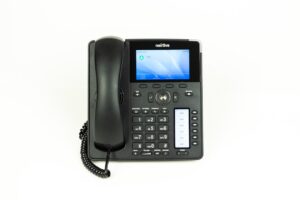
Why Home Landlines Still Make Sense in 2025
The narrative that landlines are obsolete ignores some important practical realities. The United States still had roughly 60 million residential landline subscriptions as of the most recent FCC Telephone Trends report, and that number, while declining, has stabilized among households with children, seniors, home-based workers, and anyone living in an area with inconsistent cellular coverage.
Here is why millions of households still prioritize a dedicated home phone line:
- Emergency services reliability: Traditional PSTN landlines transmit your precise address automatically to 911 dispatchers. VoIP lines can do this too, but only when properly registered. Cellular 911 calls rely on tower triangulation or GPS, which can be imprecise indoors.
- Power independence: A copper landline carries low-voltage current from the telephone exchange, meaning a corded handset works even during a power outage or when your router goes down. This matters enormously during hurricanes, ice storms, and wildfires.
- Audio quality: Traditional circuit-switched calls eliminate the packet loss, jitter, and compression artifacts that can make budget VoIP calls sound hollow. Fiber-delivered VoIP at adequate bandwidth can match that quality, but the variable nature of broadband introduces risk.
- No data plan required: For seniors on fixed incomes or households in rural areas without reliable broadband, a standalone landline remains the most accessible communication option.
- Robocall and spam protection: Many landline providers now bundle STIR/SHAKEN call authentication and proactive spam blocking, reducing nuisance calls more effectively than default smartphone settings.
- Medical monitoring compatibility: Many personal emergency response systems (PERS) and home security panels still require a traditional phone line or at minimum a standard analog telephone interface.
Understanding these use cases helps you identify which type of service actually fits your household before you start comparing monthly rates. To understand the deeper technical differences between circuit-switched and packet-switched voice, see our detailed breakdown of UCaaS vs VoIP: Decoding the Key Differences for Your Business Communications, which covers the underlying architecture in plain language.
The Three Types of Home Phone Service Explained
Before comparing specific providers, it helps to understand that “landline” has become an umbrella term covering three fundamentally different technologies. The type of service affects reliability, pricing, feature availability, and what happens when your power or internet goes down.
Traditional PSTN (Plain Old Telephone Service)
PSTN lines run on copper wire pairs from your home to a telephone switching office. They carry analog voice signals and draw their own power from the exchange, which is why they work during a blackout. AT&T and Frontier still offer true PSTN service in their wireline footprints, though AT&T has been actively petitioning the FCC to sunset copper infrastructure in many markets. If long-term PSTN availability matters to you, confirm that the provider is not in the process of transitioning your area to fiber or wireless equivalents.
VoIP Over Broadband
Voice over Internet Protocol converts your voice into digital data packets and sends them over your existing broadband connection. Providers like Xfinity Voice, Verizon Fios Digital Voice, Cox Voice, and standalone services like Voiply all use this model. Quality is generally excellent on a stable broadband connection with adequate upload bandwidth (at least 1 Mbps symmetrical per concurrent call). The critical limitation: if your internet goes down or your power goes out and your router loses power, your phone goes with it unless you have a battery backup unit (BBU) installed.
Wireless Home Phone Bases
A wireless home phone base plugs into a standard power outlet and connects to a cellular network, functioning like a stationary cell phone that your existing cordless handsets connect to via a standard RJ-11 phone jack. Consumer Cellular’s IRIS Home Phone Base is the most widely available consumer example. These units work without any wired infrastructure, making them ideal for homes without existing phone jacks or in areas where cable and phone companies provide poor service. Their limitation is obvious: they require a usable cellular signal at your specific address, and rural coverage gaps affect them just as they affect smartphones.
Top Telephone Landline Providers: Detailed Comparison
The following provider-by-provider breakdown covers pricing, technology type, key features, bundling options, availability, and honest assessments of where each provider falls short. Pricing reflects publicly advertised rates as of mid-2025; always verify current promotional pricing directly with the provider because introductory rates and bundle discounts change frequently.
AT&T Home Phone
AT&T remains one of the largest telephone landline providers in the United States by subscriber count, serving its 21-state wireline footprint across the South, Midwest, and West. Their traditional copper-based PSTN service, branded as AT&T Home Phone, represents one of the last widely available true landline options that operates independently of internet and household power.
AT&T’s Traditional Home Phone plan starts at approximately $25 per month before taxes and regulatory fees, while their Complete Choice Enhanced plan, which bundles more calling features and international rate discounts, runs $63 to $77 per month depending on the market. Standard features across most plans include caller ID, call waiting, call forwarding, three-way calling, and speed dialing. AT&T also participates in the federal Lifeline assistance program, which can reduce monthly costs for qualifying low-income households by up to $9.25 per month (or more in eligible Tribal areas).
The service genuinely shines for emergency preparedness: a corded AT&T landline will ring even during extended power outages. International calling rates are competitive for a PSTN provider, and their long operational history means technician availability and infrastructure stability are generally strong in their footprint. The notable downsides are geographic limitation (no service outside their 21-state region), the potential for unexpected regulatory surcharges that inflate the monthly bill well above the advertised rate, and AT&T’s ongoing copper retirement program, which has migrated some customers to IP-based alternatives without always clearly communicating the change. If you are evaluating AT&T for any calling service, also review the best AT&T wireless phone plans for your needs in 2026 to see whether a wireless alternative might better serve your household.
Verizon Fios Digital Voice
Verizon Fios Digital Voice is a VoIP service delivered over Verizon’s all-fiber optical network, which covers parts of New York, New Jersey, Pennsylvania, Maryland, Virginia, Delaware, Massachusetts, Connecticut, and Rhode Island. Because the service runs on fiber rather than copper, it delivers consistently low latency and high audio quality, typically achieving MOS (Mean Opinion Score) ratings above 4.0 on standard test calls.
Fios Digital Voice is not sold as a standalone product; it requires bundling with a Fios Internet plan. Phone service starts at approximately $20 per month when bundled with internet, and most bundle tiers include unlimited domestic calling plus calls to Canada and Puerto Rico. International add-on packages like Verizon’s World Plan extend coverage to select countries at a fixed monthly rate. Standard features include voicemail, caller ID, call forwarding, call waiting, and speed dial, all manageable through an online account portal.
Because the service rides over internet infrastructure, a power outage that kills your router also kills your phone unless Verizon has installed a battery backup unit (BBU) at your premises. Verizon provides BBUs with Fios installations, but batteries have a limited service life and must be replaced periodically. Fios availability is highly localized, and if you are outside their fiber footprint, Verizon is not an option for home phone service at all.
Spectrum Voice
Spectrum Voice is among the most recognizable names for people actively searching for Spectrum landline alternatives, which tells you that Spectrum occupies a dominant enough market position that competitors actively target its customers. That market position is not undeserved: Spectrum offers a single, straightforward home phone plan at approximately $15 per month when bundled with Spectrum Internet, with unlimited calling to the United States, Canada, Mexico, Puerto Rico, and a number of other included destinations.
Spectrum Voice uses a hybrid DOCSIS/VoIP architecture delivered over their cable infrastructure. It is not a pure PSTN line, so it does depend on the cable signal and, in most configurations, on your modem having power. However, Spectrum’s network reliability is generally strong in their service footprint, which covers roughly 42 states. The plan includes voicemail, caller ID, call waiting, three-way calling, and spam call blocking. The simplicity of having one plan rather than tiers to evaluate is a genuine usability advantage.
If you are considering Spectrum specifically because you want to replace your current home phone provider, the most important factor to verify is whether your address falls within Spectrum’s service territory, as coverage is tied entirely to their cable infrastructure buildout. For those specifically seeking Spectrum landline alternatives due to pricing or service concerns, Cox and Xfinity offer similar cable-based VoIP products, while Community Phone offers a cable-independent option.
Cox Voice
Cox Communications serves approximately 18 states, primarily in the South, West, and Midwest, and their home phone product, Cox Voice Preferred, is priced at around $20 per month with equipment included. That equipment inclusion is a meaningful differentiator because many providers charge a separate monthly rental fee for the telephone modem adapter. Unlimited calling covers the United States, Canada, and Mexico.
Cox Voice includes a feature set that goes slightly beyond the standard package: robocall blocking, simultaneous ring (your home phone and cell phone ring at the same time for the same incoming call), call return, and speed dial. The simultaneous ring feature is particularly useful for households where adults frequently move between rooms or spend time outside, reducing the chance of missing calls on the home line. Cox also offers Spanish-language customer support, which is a practical accessibility consideration for a significant portion of their service territory.
Bundling Cox Voice with Cox Internet and Cox TV can reduce the effective per-service cost substantially, and Cox regularly runs promotional pricing for new customers. As with all cable-based VoIP, the service requires an active cable connection and a powered modem, so power outages affect service availability.
CenturyLink (Lumen) Connected Voice
CenturyLink, now operating its consumer services under the Lumen Technologies parent brand in most markets, offers home phone service through their Connected Voice Basic plan at approximately $30 per month. This plan requires both an IP phone device (sold separately, typically $50 to $100) and an active CenturyLink internet connection. For customers who do not want to bundle internet, the Connected Voice Air-Line plan provides the same features using their cellular infrastructure instead.
The standout feature is international calling: all Connected Voice plans include 500 international minutes per month, which is genuinely unusual at this price tier. Most competitors either exclude international calling entirely or charge a significant per-minute rate. Domestic calling is unlimited to the continental United States, Puerto Rico, and the U.S. Virgin Islands. Standard features include caller ID, call waiting, call forwarding, telemarketer blocking, and E911 with registered address transmission.
The honest caveat for CenturyLink is customer satisfaction. Aggregated review data from platforms including Yelp and the BBB consistently shows ratings well below the industry average, with complaints centering on billing accuracy, difficulty reaching customer service, and service reliability in rural areas. The international minute inclusion is a genuine value, but weigh it against the documented service experience before committing.
Frontier Communications
Frontier Communications serves approximately 25 states, with particularly dense presence in California, Texas, Florida, and the northeast following acquisitions of former Verizon wireline territories. Frontier offers both traditional copper-based PSTN service and, increasingly, fiber-delivered VoIP through their Frontier Fiber buildout, which had passed approximately 10 million locations as of late 2024.
On copper, Frontier’s traditional landline service maintains the core advantage of power-independent operation with a corded handset, which is important for customers in hurricane and tornado-prone areas within their Florida and Texas territories. On fiber, Frontier Fiber Voice delivers VoIP quality comparable to Fios. Pricing varies significantly by market and whether the service is bundled, but standalone phone plans generally run $25 to $40 per month before taxes.
Frontier emerged from Chapter 11 bankruptcy in 2021 and has invested heavily in fiber expansion since, which has improved network quality metrics in their upgraded markets. However, copper infrastructure in areas not yet reached by fiber expansion can show age-related reliability issues. Checking specific address availability and reading recent reviews from customers in your specific city or region is more useful than relying on Frontier’s national reputation, which varies widely by geography.
Xfinity Voice
Xfinity Voice Premier, Comcast’s home phone product, is priced at approximately $40 per month standalone but is commonly bundled with Xfinity Internet at a discount that can bring the effective phone cost down to $10 to $20 per month. The plan includes unlimited domestic calling plus calling to more than 90 countries, making it one of the more internationally generous included plans in the cable category. Xfinity’s coverage footprint reaches approximately 40 states, giving it one of the broadest geographic footprints among cable providers.
Feature highlights include anonymous call blocking, caller ID display on compatible Xfinity TV boxes, voicemail accessible by phone or online, three-way calling, call forwarding, and call waiting. The service is VoIP over Xfinity’s DOCSIS cable infrastructure, so it requires a powered modem. Xfinity does not mandate long-term contracts on most residential plans, which is a flexibility advantage over some competitors.
The primary risk factor is the same as all cable VoIP: power outages kill the service unless you have a battery backup for your modem. In areas prone to extended outages, this matters. Xfinity’s customer service reputation has historically been mixed, though their investment in self-service tools through the Xfinity app has improved routine support experiences.
Voiply
Voiply is a pure-play residential VoIP provider without a cable or telephone company infrastructure footprint, meaning it works over any broadband connection regardless of provider. This provider-agnostic model is a genuine advantage: if you switch internet providers, your Voiply service moves with you. Plans start at approximately $8.95 per month when billed annually, or slightly higher month-to-month, and include unlimited calling to more than 50 countries, a feature set that rivals services costing four times as much.
Voiply ships a free analog telephone adapter (ATA) directly to your address, and there are no setup fees or number porting charges. Your existing corded or cordless handsets plug into the adapter’s standard RJ-11 jack, so no new equipment purchases are required beyond the adapter itself. Annual prepayment typically includes two free months, reducing the effective annual cost further.
The tradeoff for the low price is a relatively lean feature set compared to enterprise-grade VoIP. Voiply covers the essentials: voicemail, caller ID, call waiting, call forwarding, and three-way calling. Call quality on a stable broadband connection is generally reliable, but Voiply does not offer the same level of customer support infrastructure as a Comcast or AT&T. For cost-conscious households that primarily need domestic calling with the bonus of international reach, Voiply is hard to beat on pure value.
Community Phone
Community Phone occupies a specific and underserved niche: a landline service that requires neither cable infrastructure nor broadband internet. Their base unit connects to cell towers directly, functioning as a bridge between standard corded or cordless handsets and the cellular network. This makes it the closest available substitute to a true PSTN landline for households that have discontinued internet service or that live in areas where cable infrastructure does not exist.
Pricing runs approximately $37 to $57 per month depending on the plan tier, plus a one-time equipment fee of roughly $75 for the base unit plus shipping. Annual plans reduce the monthly rate and include one month free. All plans cover unlimited domestic calling, and some tiers include international calling. Community Phone claims to block over 99% of spam and robocalls using their proprietary filtering layer, which is a significant quality-of-life benefit for older adults who are disproportionately targeted by phone scams.
Coverage depends entirely on cellular network availability at your specific address. Community Phone uses multiple carrier partnerships to maximize coverage, but rural dead zones will still affect service. Some customers have reported occasional call routing anomalies. Checking coverage at your address through Community Phone’s website before ordering equipment is essential. The month-to-month cancellation policy reduces financial risk if the service does not perform well at your location.
Consumer Cellular Home Phone
Consumer Cellular’s IRIS Home Phone Base uses the same cellular-based bridge technology as Community Phone but pairs it with Consumer Cellular’s talk and text plans, which start at $20 per month for 250 minutes and scale to unlimited talk for approximately $30 per month. The IRIS base unit costs approximately $89 new or less for refurbished units. It includes a battery backup rated for roughly three hours of use during power outages, a meaningful advantage over cable VoIP options.
Consumer Cellular’s primary demographic is adults over 50, and their customer service approach reflects that focus: U.S.-based support agents, straightforward plan language without technical jargon, no long-term contracts, and AARP member discounts that can reduce monthly costs by 5%. The service is genuinely portable; you can take the base to a vacation home or a temporary residence as long as cellular coverage exists at that location.
The coverage caveat applies here as prominently as with Community Phone: strong cellular signal is a prerequisite. Consumer Cellular runs primarily on T-Mobile’s network with some AT&T roaming, so checking T-Mobile coverage at your address is the most direct proxy for expected performance. If cell coverage is weak inside your home, neither Consumer Cellular nor Community Phone will deliver satisfactory results.
Provider Comparison Table: Best Landline Phone Service Options at a Glance
| Provider | Technology | Starting Price/Mo | Works Without Internet? | International Calling | Bundle Available? | Contract Required? |
|---|---|---|---|---|---|---|
| AT&T | PSTN/Copper | ~$25 | Yes (corded) | Add-on rates available | Yes | Varies by plan |
| Verizon Fios | Fiber VoIP | ~$20 (bundled) | No (BBU helps) | World Plan add-on | Required | No |
| Spectrum | Cable VoIP | ~$15 (bundled) | No | Canada, Mexico included | Yes | No |
| Cox | Cable VoIP | ~$20 | No | Add-on available | Yes | No |
| CenturyLink | IP Voice | ~$30 | Air-Line option: Yes | 500 min/mo included | Yes | Varies |
| Frontier | PSTN or Fiber VoIP | ~$25 | Yes (copper markets) | Add-on available | Yes | Varies |
| Xfinity Voice | Cable VoIP | ~$40 (standalone) | No | 90+ countries included | Yes | No |
| Voiply | Broadband VoIP | ~$8.95 | No | 50+ countries included | No | No |
| Community Phone | Cellular Bridge | ~$37 | Yes (cellular) | Select plans | No | No |
| Consumer Cellular | Cellular Bridge | ~$20 | Yes (cellular, BBU) | Per-minute rates | No | No |
How to Choose the Best Landline Phone Service for Your Home
Matching yourself to the right provider requires honest answers to a handful of practical questions. Here is a structured framework for making the decision.
Step 1: Determine Your Primary Use Case
Are you adding a home phone primarily for emergency backup during outages? Then a PSTN copper line from AT&T or Frontier in their wireline territories, or a cellular bridge unit from Community Phone or Consumer Cellular, is your best choice. If your main driver is reducing the cost of international calls, Voiply’s 50-plus country inclusion or CenturyLink’s 500-minute international allowance deserves serious consideration. If you simply want to consolidate household services and cut overall monthly costs, bundling with your cable provider through Spectrum, Cox, or Xfinity typically delivers the best per-service value.
Step 2: Verify Availability at Your Address
This sounds obvious, but it eliminates several options immediately. AT&T PSTN service only exists in 21 states. Verizon Fios is limited to nine northeastern states. Cox serves 18 states. Spectrum covers more broadly but still has large gaps. Before evaluating any provider’s pricing or features in depth, run your address through their coverage checker. For cellular bridge services, check the underlying network’s coverage map (T-Mobile for Consumer Cellular, multiple carriers for Community Phone).
Step 3: Calculate Total Monthly Cost, Not Advertised Rate
The advertised monthly rate for home phone service is almost always lower than your actual bill. Add together the base plan rate, equipment rental or purchase fee, regulatory recovery fees (typically $3 to $8 per month), state and local taxes (varies by jurisdiction but averages